
Maintenance & Tune-Up in Elgin
Garage Door Maintenance for Elgin's Newer Homes
Elgin's homes are newer than most of the area we cover from Lawton, with doors and openers built after 2000. Here's what that means for upkeep and what we carry on the truck.
- Licensed & Insured
- Same-Area Service Calls
- Upfront Pricing
What Happens When You Call
-
1
Call or Request a Quote
Tell us what the door is doing and roughly how old the house is - that alone points us toward the likely part before a truck leaves.
-
2
On-Site Diagnosis
A tech checks the spring, cables, tracks, and opener in person and tells you plainly what is actually wrong.
-
3
Straight Price, No Surprises
You get a number before any work starts. It covers parts and labor, nothing added after the fact.
-
4
Fixed the Same Visit
Most repairs are done in one trip. If a part needs sourcing, we tell you that upfront instead of guessing.
What Can Go Wrong
Elgin is a small stop for us, around 1,220 households, and it's a different maintenance job than most of the area we cover out of Lawton. Housing across the wider service area runs a median build year of 1985, but Elgin's median is 2008 - a solid twenty years newer. That matters because the doors and openers going bad here aren't the same ones going bad in the older neighborhoods.
Instead of worn-out one-piece doors on side hardware, you're mostly looking at sectional doors with factory torsion springs, and openers with photo-eye safety sensors and keypad entry as standard equipment rather than a later add-on. The failures that show up first in a 2000s-era door are usually the small stuff: a photo-eye knocked out of alignment, a plastic idler bearing that's gone brittle, or a logic board in the opener that's outlived its capacitors. Springs on newer doors do fail, but later in the door's life than the springs on 1980s hardware.
Cold-band winters still put stress on steel and lubricant regardless of the door's age, so even a newer setup isn't exempt from seasonal issues - it just tends to show up differently than it does on older housing stock.
The DIY Question
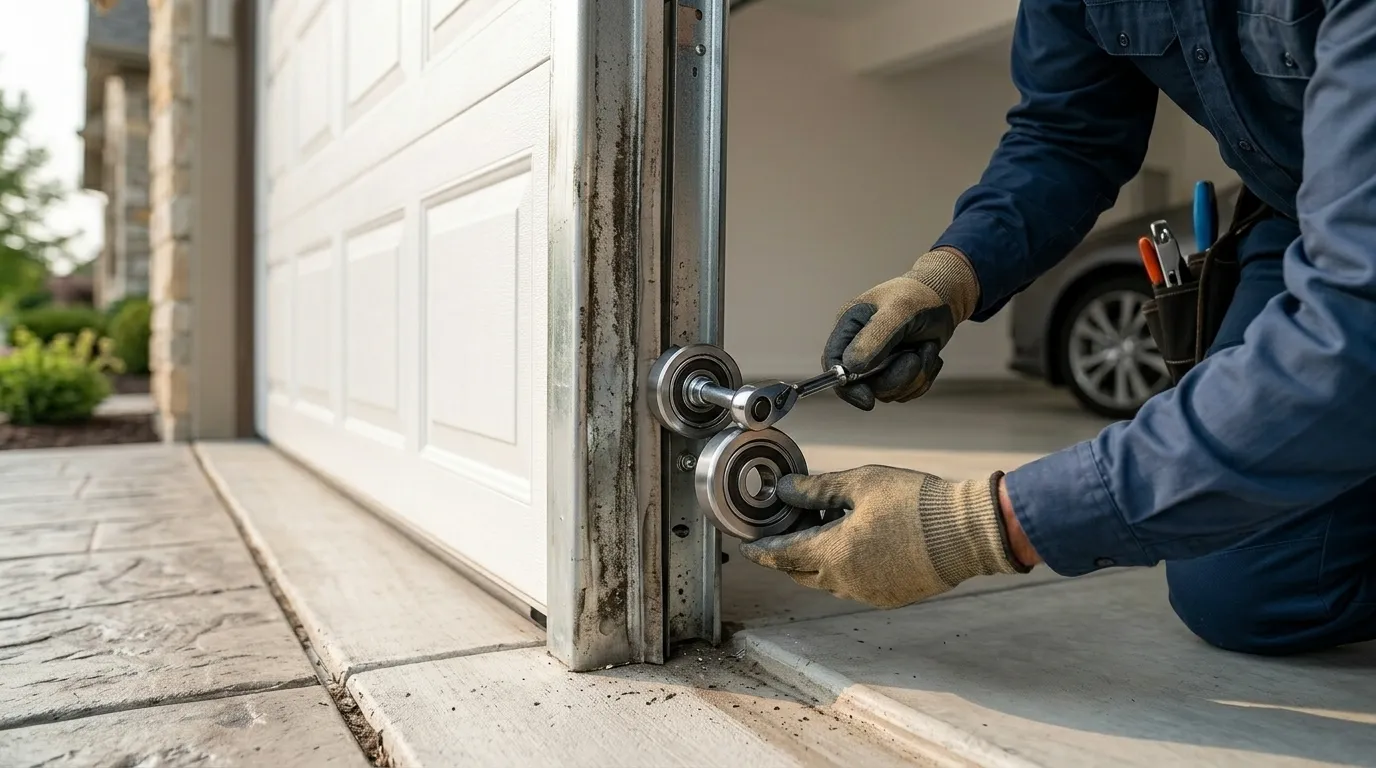
A homeowner can safely handle a few things on a door this age: wiping down and lubricating rollers and hinges, checking that the photo-eye sensors are aligned and clean, and testing the auto-reverse function by holding a 2x4 under the door as it closes. All reasonable, all low-risk.
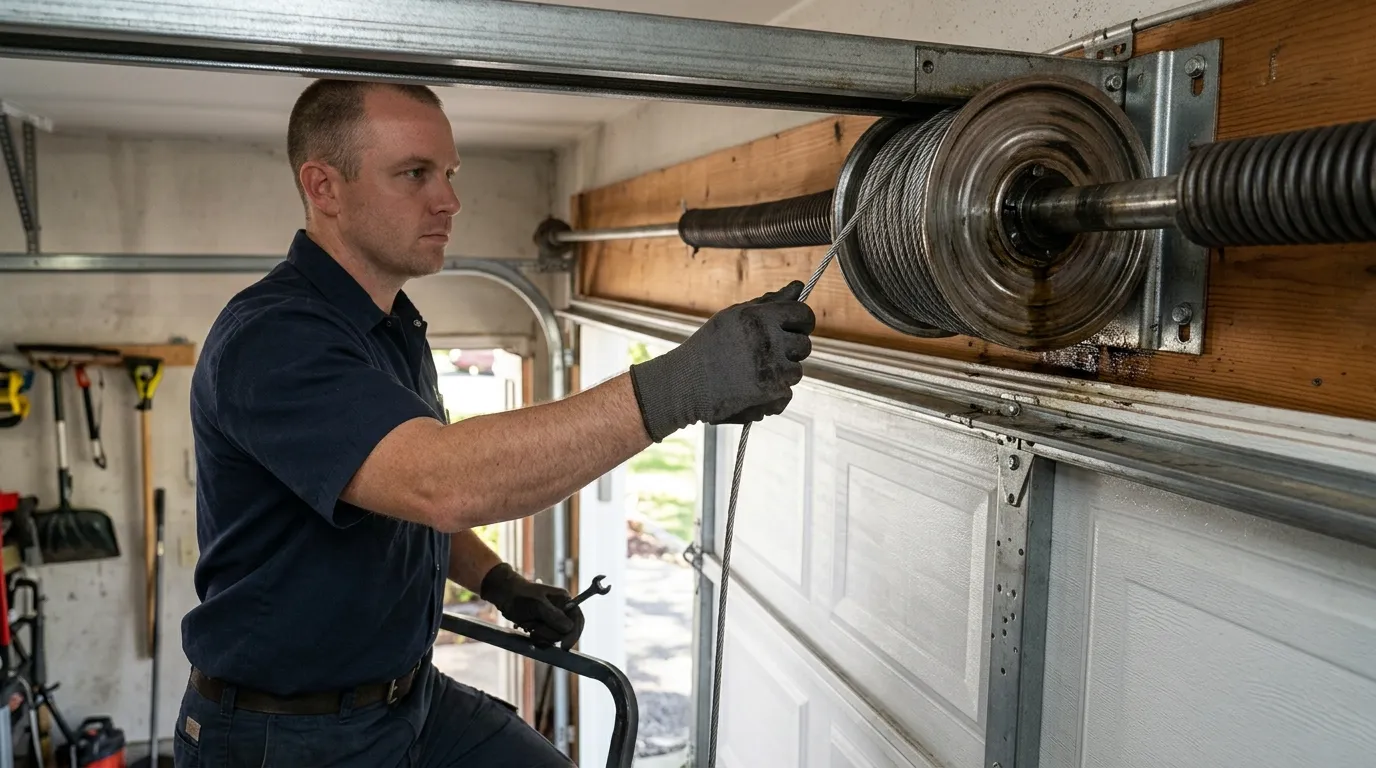
What isn't worth doing yourself is anything involving the torsion spring or the cable drums. A spring under tension on a sectional door holds enough stored energy to break a hand or worse, and on a 2008-era door that spring is still likely original - it hasn't had twenty years to loosen or corrode the way an older one might, so it can let go just as hard as ever. If your opener logic board is throwing error codes or the door won't reverse on the sensor test, that's a call, not a project.
The Symptom
The most common call we'd expect out of Elgin isn't a broken spring - it's an opener that's stopped responding cleanly, or a door that reverses when it shouldn't. On housing this age, that symptom usually traces back to a photo-eye sensor that's drifted out of alignment, a wiring connection at the sensor bracket that's corroded slightly, or an opener board reaching the end of its expected life.
A door that shudders or stutters partway through its cycle on a home built in the 2000s is more often a track alignment or roller issue than a spring problem, since the spring itself hasn't had the decades of cycling that wear one out. We don't guess at this over the phone - it takes a look at the door running to tell the difference between a five-minute sensor fix and something that needs a part ordered.
Getting It Booked In
We run out of Lawton, fourteen miles from Elgin, so a maintenance visit here gets scheduled rather than dropped in on same-day. That's the honest limitation: we're not based in Elgin, and if you need something looked at today, call and we'll tell you straight whether that's realistic given the drive.
For routine maintenance - the kind of visit where nothing is actively broken yet - that drive isn't a problem. We come out, run the door through its cycle, check spring tension, sensor alignment, and opener function, and flag anything that's close to failing before it does.
Stocked Parts
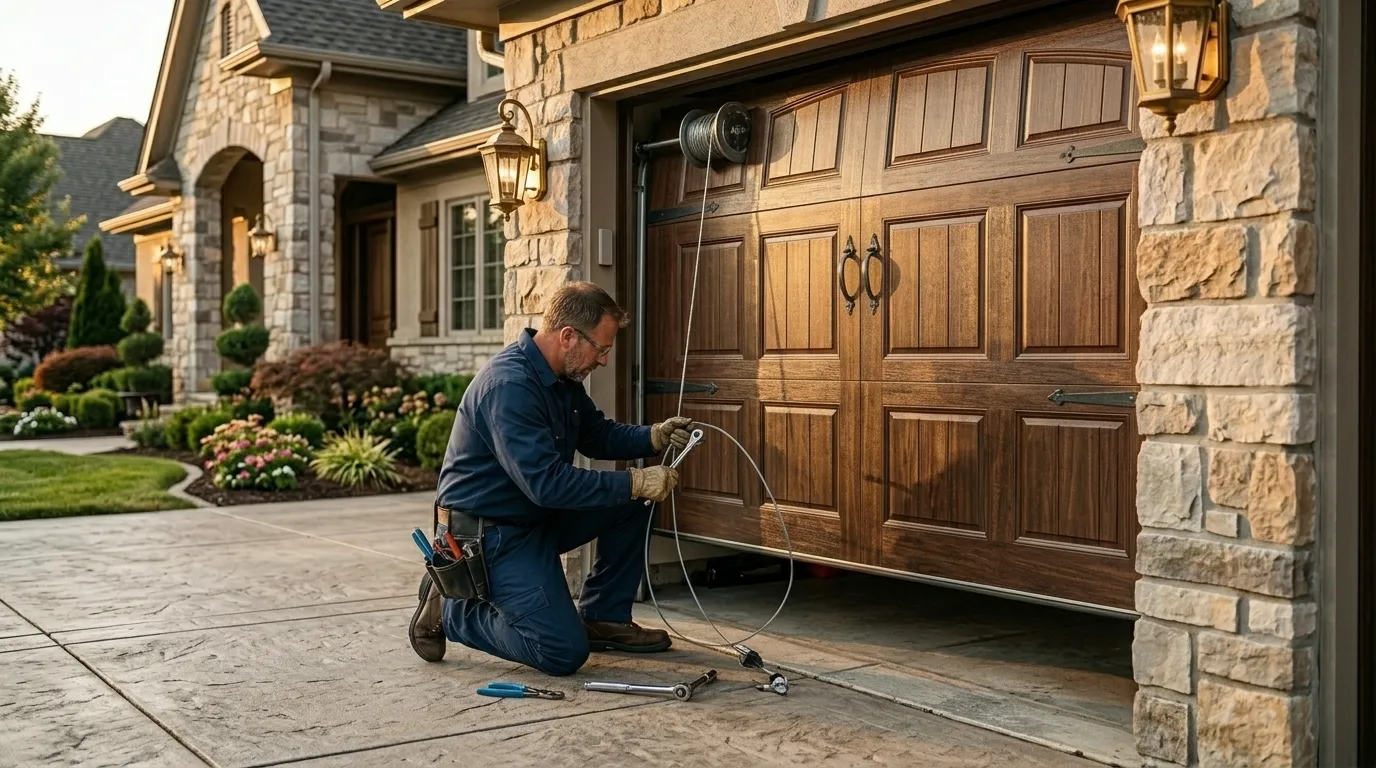
Because Elgin's housing stock is newer than most of what we service, the parts most likely to come up here are opener-side: photo-eye sensor pairs, circuit boards for common opener brands sold through the 2000s, and keypad or remote units. We carry the common sensor and roller parts on the truck.
Where we run into lead time is opener logic boards for less common brands - those sometimes have to be ordered, and we'll tell you that up front rather than promise a same-visit fix we can't back up. Springs, when they do need replacing on a door this age, are a standard stock size for us, not a special order.
Talk to a Elgin Technician First
Describe what the door is doing and get a straight answer on what it likely needs.
Other Garage Door Services in Elgin
Recent Work in Elgin
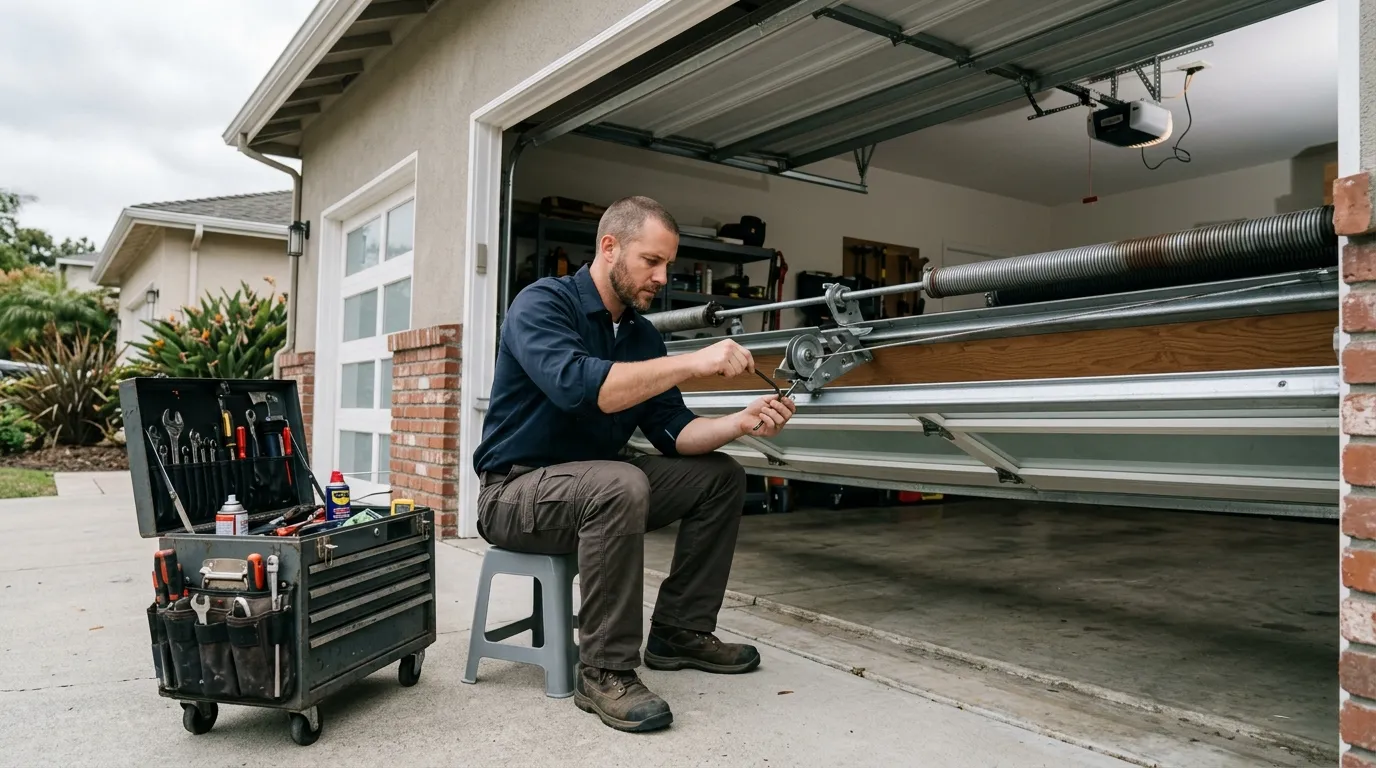
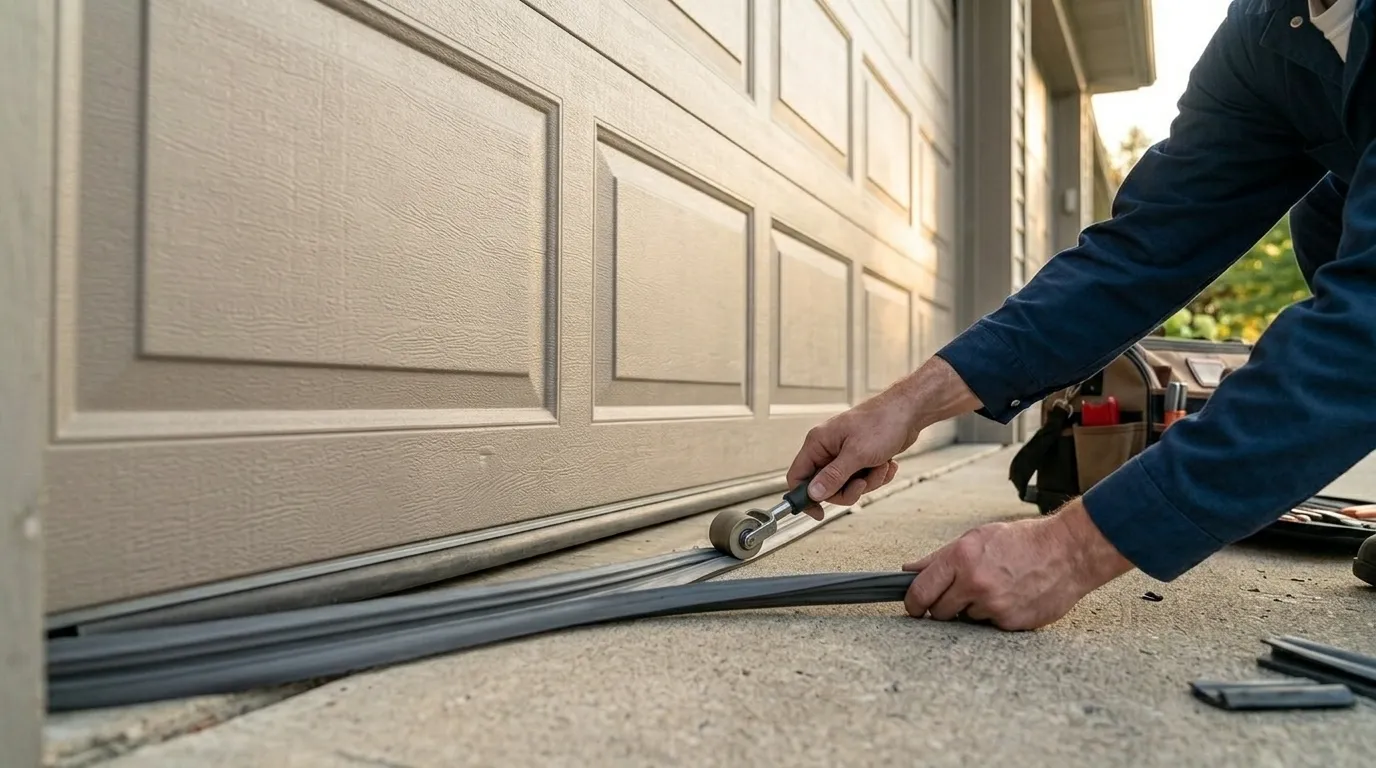
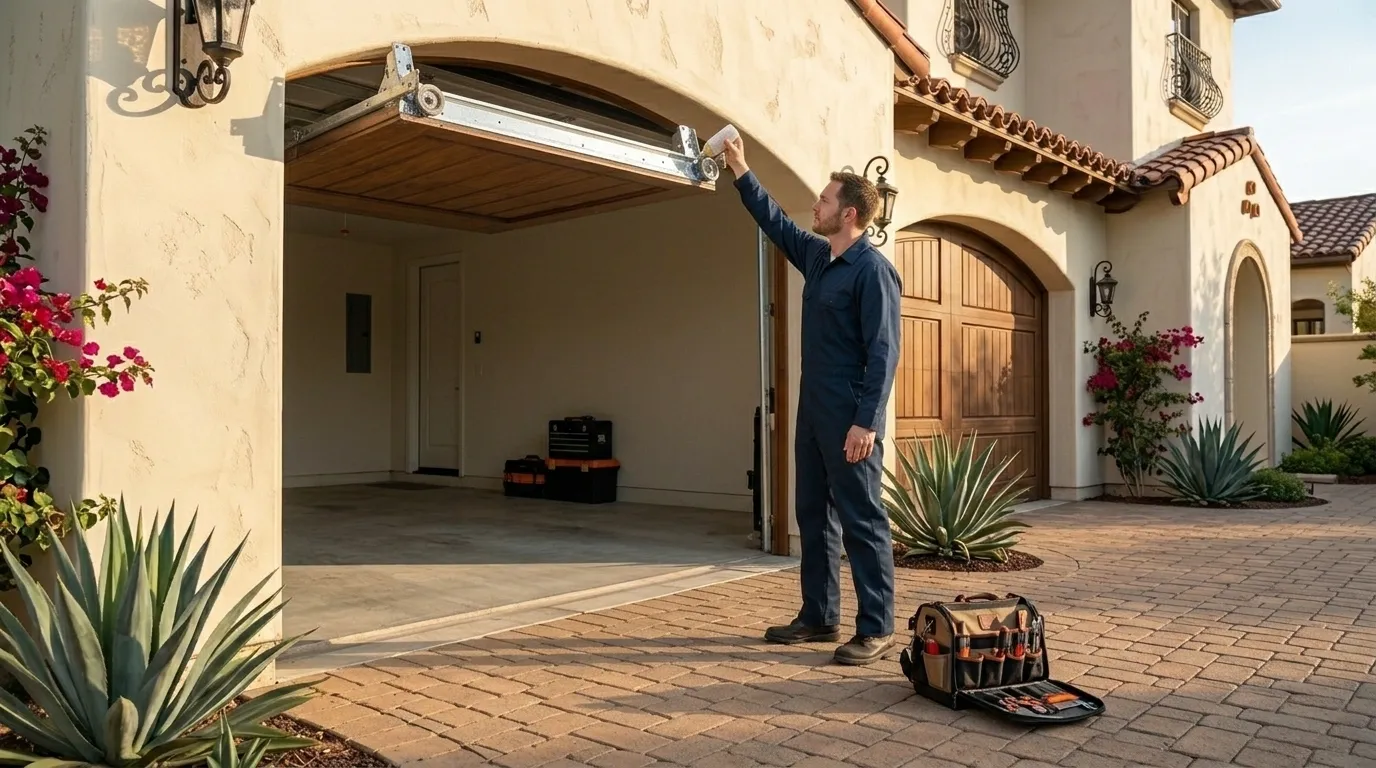
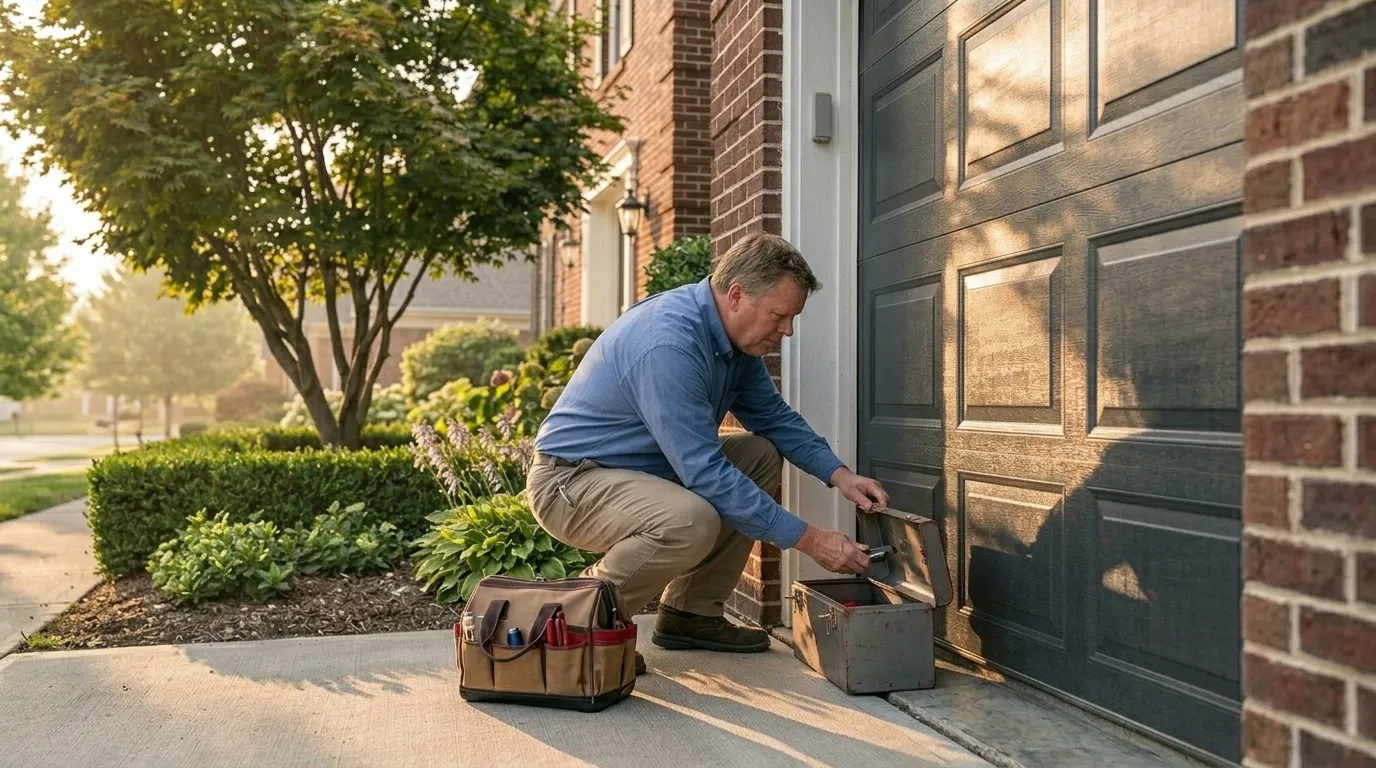
A look at jobs our crew has been on nearby.
Why Elgin Calls Us
Frequently Asked Questions
Is a 2000s garage door actually easier to maintain than an older one?
In some ways, yes. The hardware hasn't had as many cycles, so springs and cables are less likely to be near failure. But it also has more electronics - sensors, circuit boards, keypads - that a 1980s door simply didn't have, and those parts fail differently than worn mechanical hardware does.
How often should a door built around 2008 get serviced?
We don't have a single number that fits every door, but annual attention to lubrication, sensor alignment, and spring tension catches most problems before they turn into a stuck door. Cold-weather months are when stiff lubricant and misaligned tracks tend to show themselves first.
Do you have a branch in Elgin?
No. We're based in Lawton, about fourteen miles out, and we schedule Elgin maintenance visits from there. For anything urgent, call first and we'll be straight with you about timing.
Why would my opener sensor go bad on a newer door?
Photo-eye sensors are simple but exposed - a small bump, a spider web across the lens, or a loose bracket can all throw off alignment. On homes built in the 2000s, this is one of the most common calls we'd expect, more common than a broken spring at this stage of the door's life.
Need Maintenance & Tune-Up in Elgin?
Call now for straight answers on cost and timing.