
Lawton Garage Door Guide
Garage Doors in Lawton: What a 1985 Median Build Year Means for Your Repair
Lawton-area homes mostly date to 1956-2008, median 1985. See what that build era and our cold-moderate climate actually do to springs, tracks, and openers.
- Licensed & Insured
- Same-Area Service Calls
- Upfront Pricing
What Most People Get Wrong
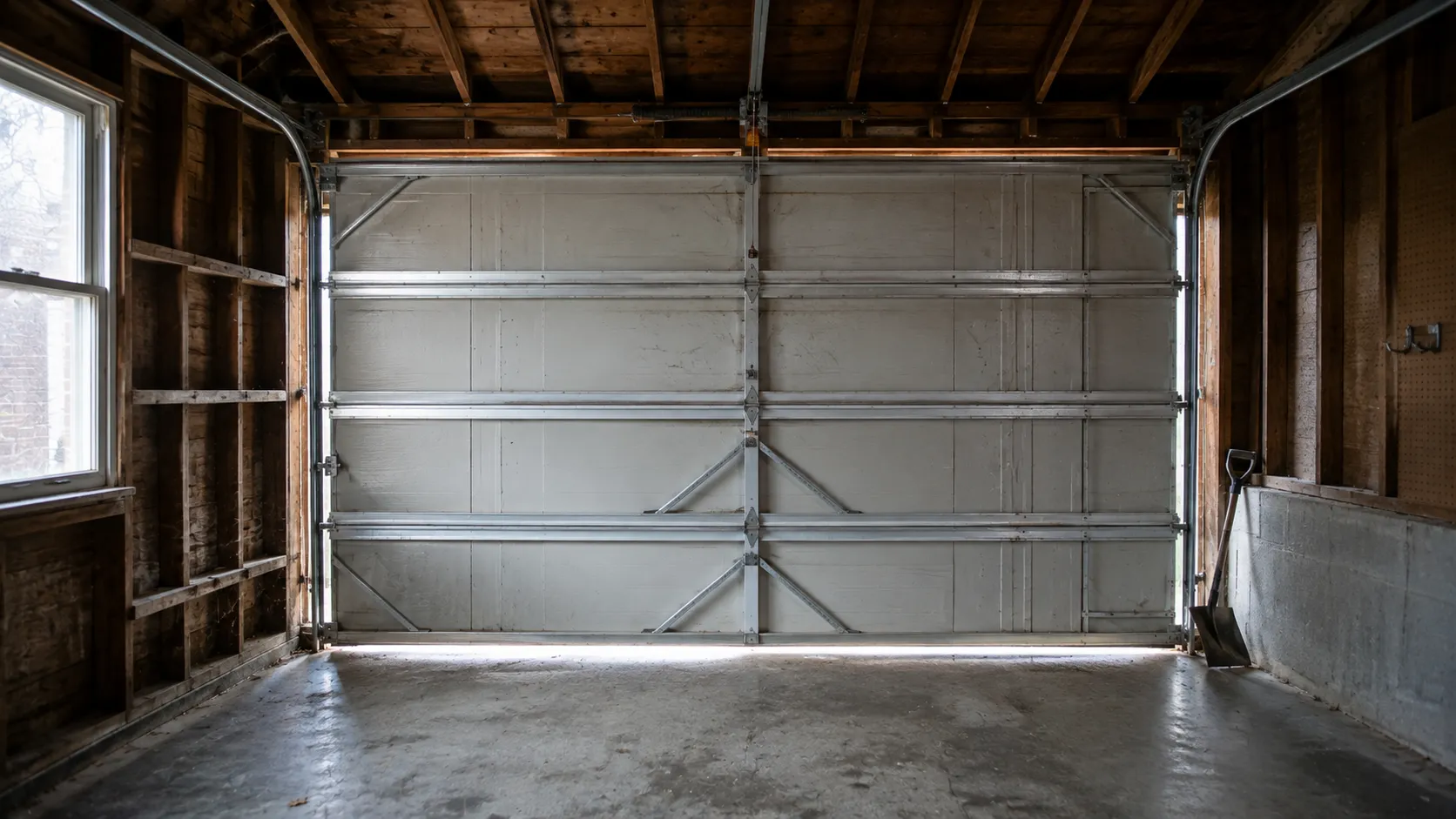
The call we get most often starts the same way: "it's just noisy, probably needs oil." In the Lawton service area, where housing mostly went up between 1956 and 2008 with the median sitting around 1985, that noise is more often the sound of hardware reaching the end of a long run than a lubrication problem. A torsion spring installed when a house was built in the mid-80s has had close to forty years to fatigue, and steel doesn't give much warning before it lets go.
The other assumption we run into is that a repair from one house on the block will match the next. It won't, even within the same subdivision.
Builder-grade doors from that era came in a handful of spring sizes and track configurations depending on which of the nine areas we cover the house sits in, and a lot of that hardware isn't made anymore in the exact spec. What fixed the neighbor's door in an afternoon might mean a special order for yours.
We'd rather tell you that up front than have you wait on a quote that assumes your door is identical to one three doors down.
What Local Conditions Do
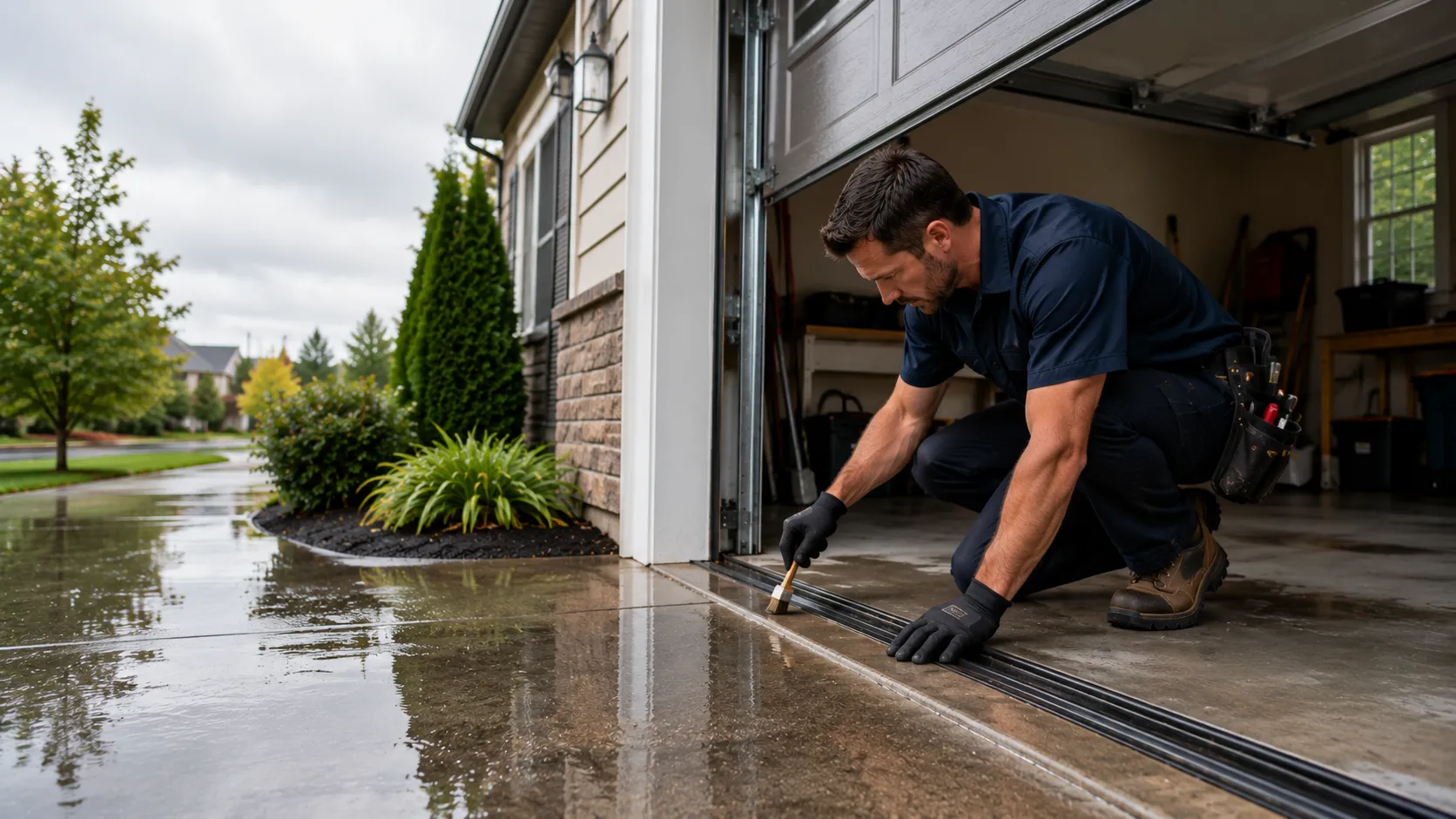
Lawton sits in a cold-moderate climate band, and that matters more to a garage door than most people expect. It's not extreme cold, but it's enough freeze-thaw cycling through the winter to work on steel tracks and torsion springs in a way a warmer market never sees. Metal contracts in a hard cold snap and expands again a few days later when temperatures swing back up, and that repeated flex is what eventually opens a gap in a torsion spring's coil or throws a track slightly out of alignment.
On a lot of the 1980s and 90s stock in this area, the weatherstripping along the bottom panel has never been replaced. Once that seal cracks, cold air gets under the door and any moisture in the garage freezes to the slab, which is how we end up with doors that won't break loose on a cold morning even though nothing mechanical has failed.
We don't get true deep-freeze events here the way northern states do, so we're not building doors and openers to handle that kind of load. But the cycling itself, warm to cold and back, over a house that's now 35 to 65 years old, is steady wear that adds up.
The Cost of This Job
We're not going to put a number here that isn't backed by a fact sheet, and we don't quote a price over the phone without seeing the door. What we can tell you is what drives the cost up or down on a house from this era.
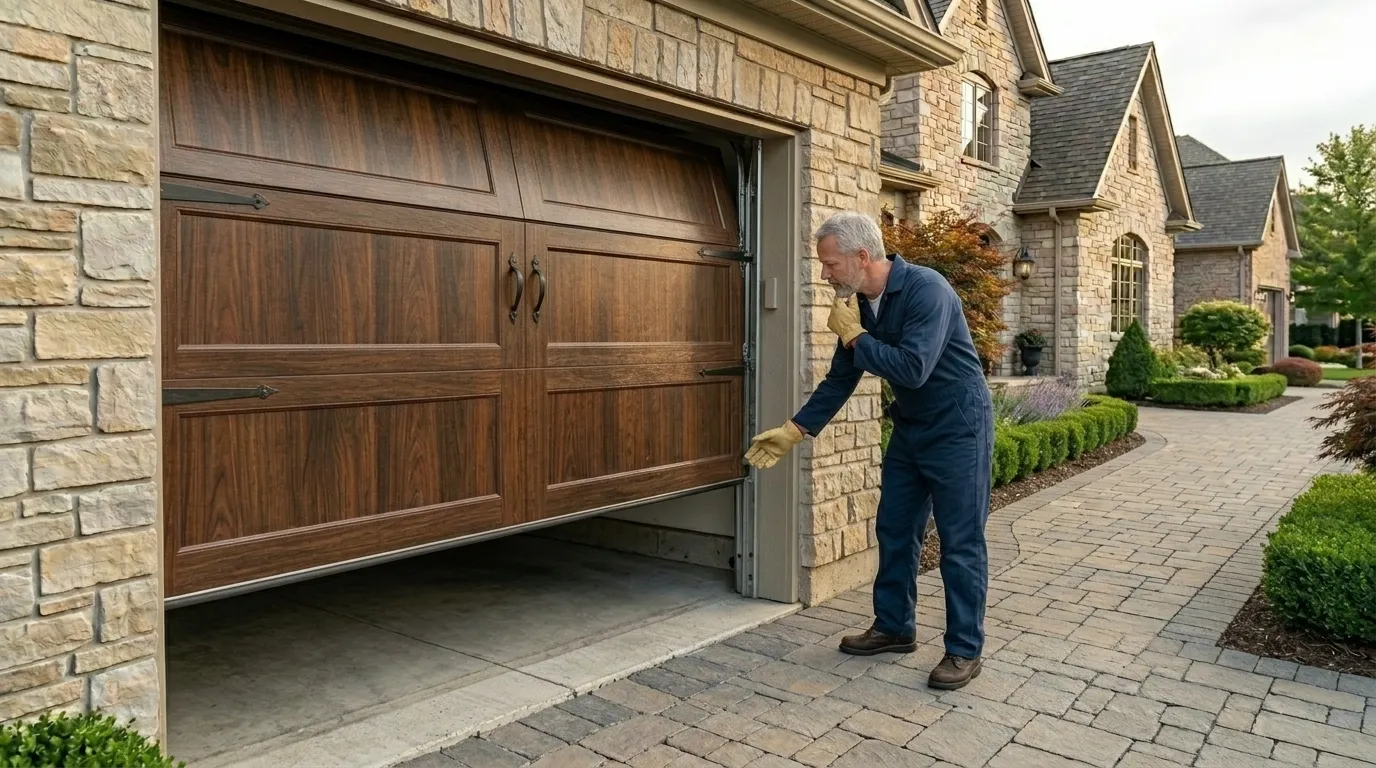
If your door and opener date to the original build, somewhere in that 1956-2008 range with most of it clustering in the 80s and 90s, the first question is whether the spring size or track width is still a stock item. Builder-grade hardware from that window sometimes isn't, and sourcing a non-standard part costs more in time than the part itself.
The other driver is how many systems have failed at once. A door that's been ignored for years often needs the spring, the cables, and the rollers together, not just the one piece that finally broke. Across the 3,742 owner-occupied houses in the roughly 5,432 households we serve, that's the more common call: not a single clean failure, but several worn parts reaching the end together because nobody caught the first one early.
Replacement makes more sense than repair once the door itself, not just the hardware, has started to sag or warp. We'll tell you straight when that's the case instead of running up a repair bill on a door that's not worth saving.
What Is Going On
Put the pieces together and the picture is pretty clear. Housing in this area mostly went up between 1956 and 2008, with the median landing around 1985, which means a large share of the garage doors and openers on the road are original or close to it. Layer a cold-moderate climate on top of that, with real freeze-thaw cycling every winter, and you get steel hardware that's been working harder than its age alone would suggest.
Median household income in the area sits at $61,554, which tracks with what we see on most jobs: homeowners who'd rather fix a spring or a section than replace a whole door, and who want a straight answer about whether that's the smart move. That's most of what we do.
We cover Lawton itself along with the smaller places around it - Medicine Park nine miles out, Cache at eleven, Geronimo at ten, Elgin at fourteen, Fletcher and Walters both around eighteen, and Indiahoma, Central High, and Apache out around nineteen. The housing stock and the weather don't change much between those towns, so the same issues show up on both sides of that distance.
How We Can Help
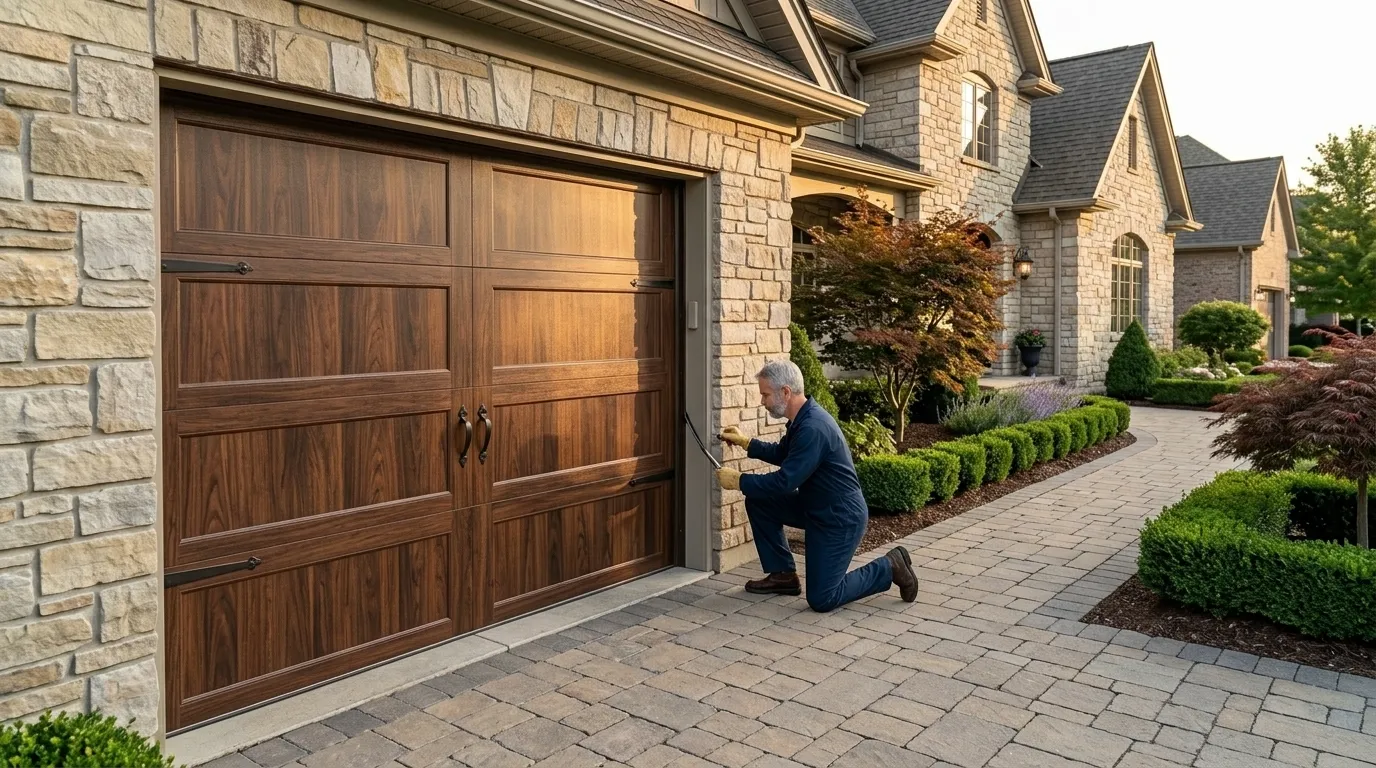
Garage Door Repair
Springs, cables, tracks, rollers, and openers fixed by a tech who explains the problem before touching anything.
Learn more →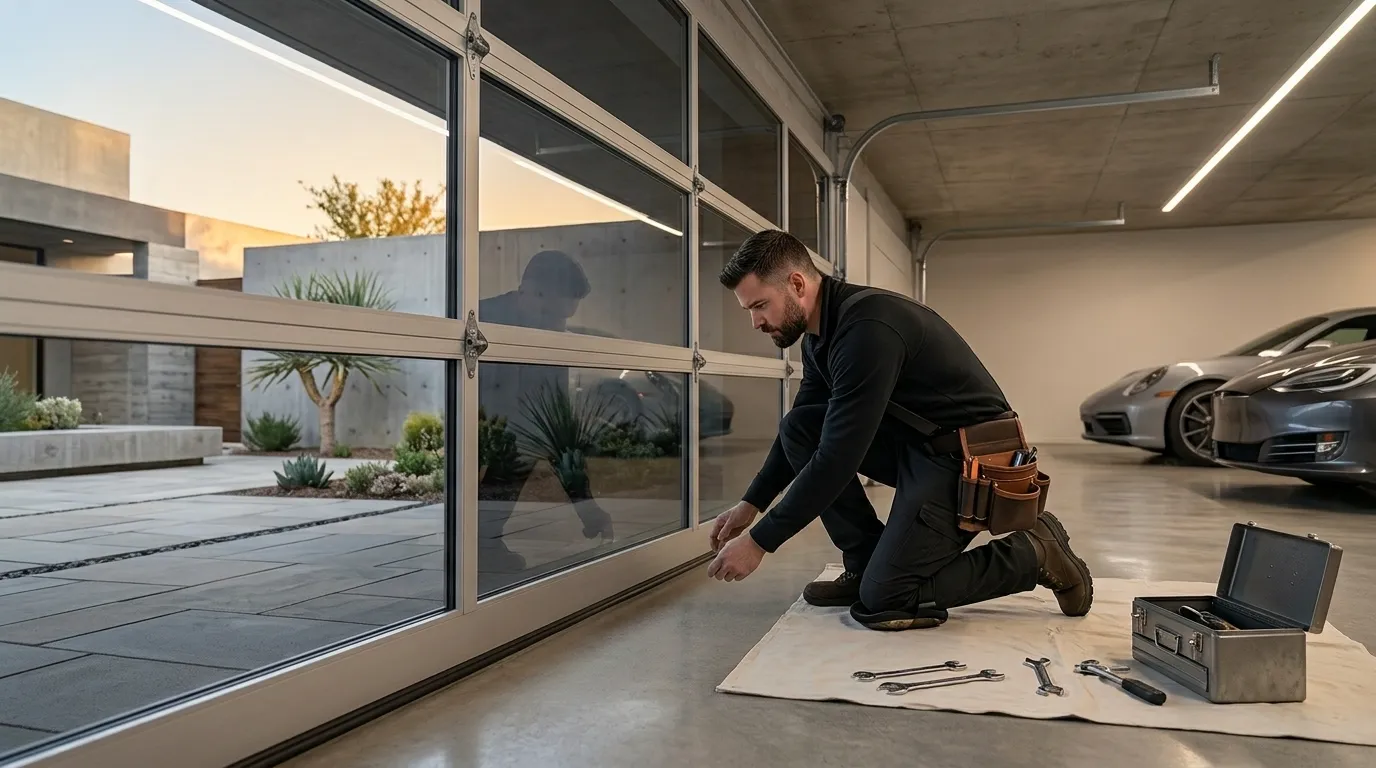
Garage Door Installation
New sectional doors sized and installed for the housing stock actually built in this area.
Learn more →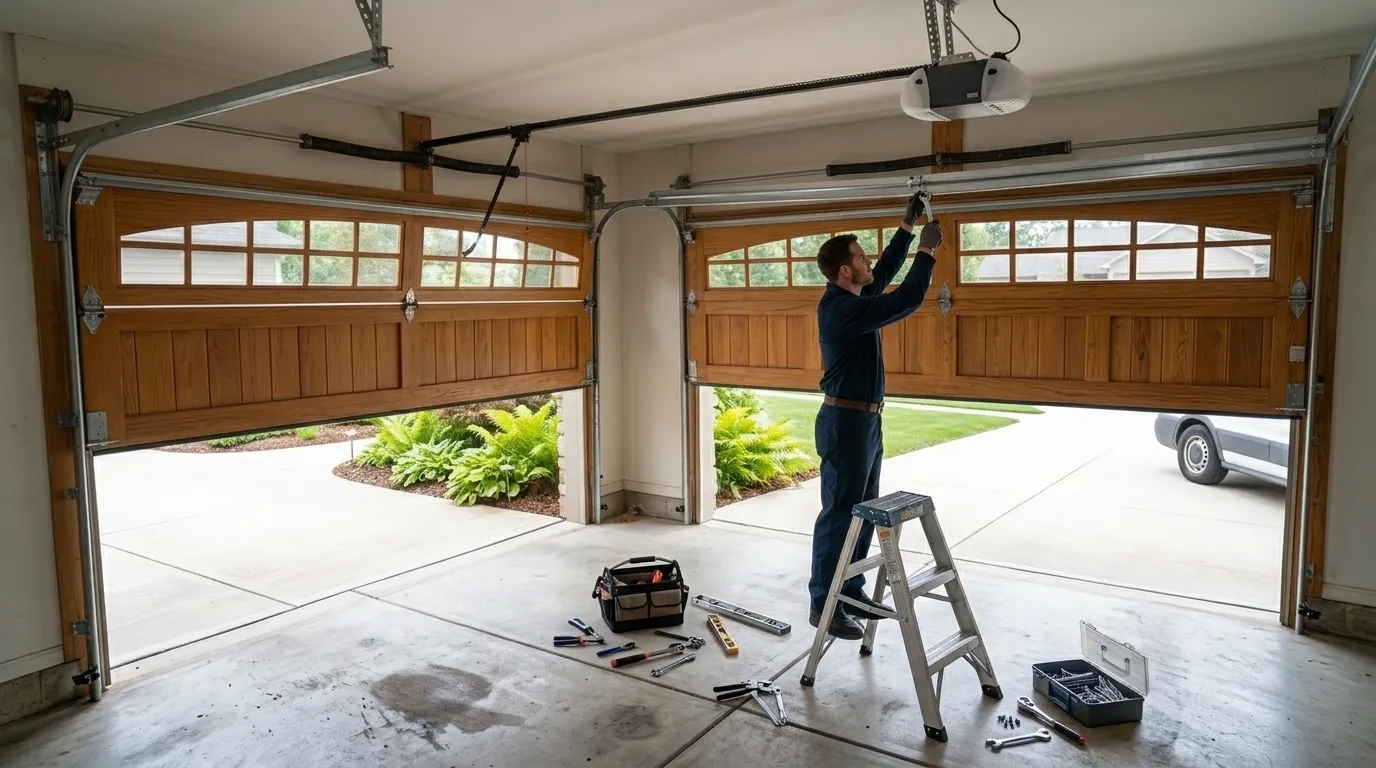
Garage Door Service
Tune-ups, lubrication, and safety checks that catch a small problem before it becomes a service call.
Learn more →Frequently Asked Questions
My door is original to the house, built sometime in the 80s. Should I just replace it?
Not necessarily. If the panels are still straight and the track is sound, a spring and hardware replacement often gets years more out of it. Replacement makes sense once the door itself is sagging, warped, or the panels are cracking, not just because the hardware is old.
Why does my door get harder to open in the winter?
Cold cycling in this area stiffens lubricant, contracts steel slightly, and if the weatherstripping has cracked, lets moisture freeze under the bottom panel. Any one of those adds resistance. Together they can make an otherwise fine door feel like it's fighting you every cold morning.
Do you cover Cache or Geronimo, not just Lawton?
Yes. We work Lawton and the smaller towns around it, including Cache, Geronimo, Medicine Park, Elgin, Fletcher, Walters, Indiahoma, Central High, and Apache. Housing age and winter conditions are similar enough across that area that the same repairs come up on both sides of town.
Can you tell me a price before you see the door?
Not honestly, no. Cost depends on whether your hardware is a common size or an older non-stock spec, and how many parts have failed together. We'll give you a real number after we look at it, not a guess over the phone.
Have a Door That Needs a Second Opinion?
Call and describe what it is doing - we will tell you what it likely is.